The ocean deserves better decisions, not just alarm.
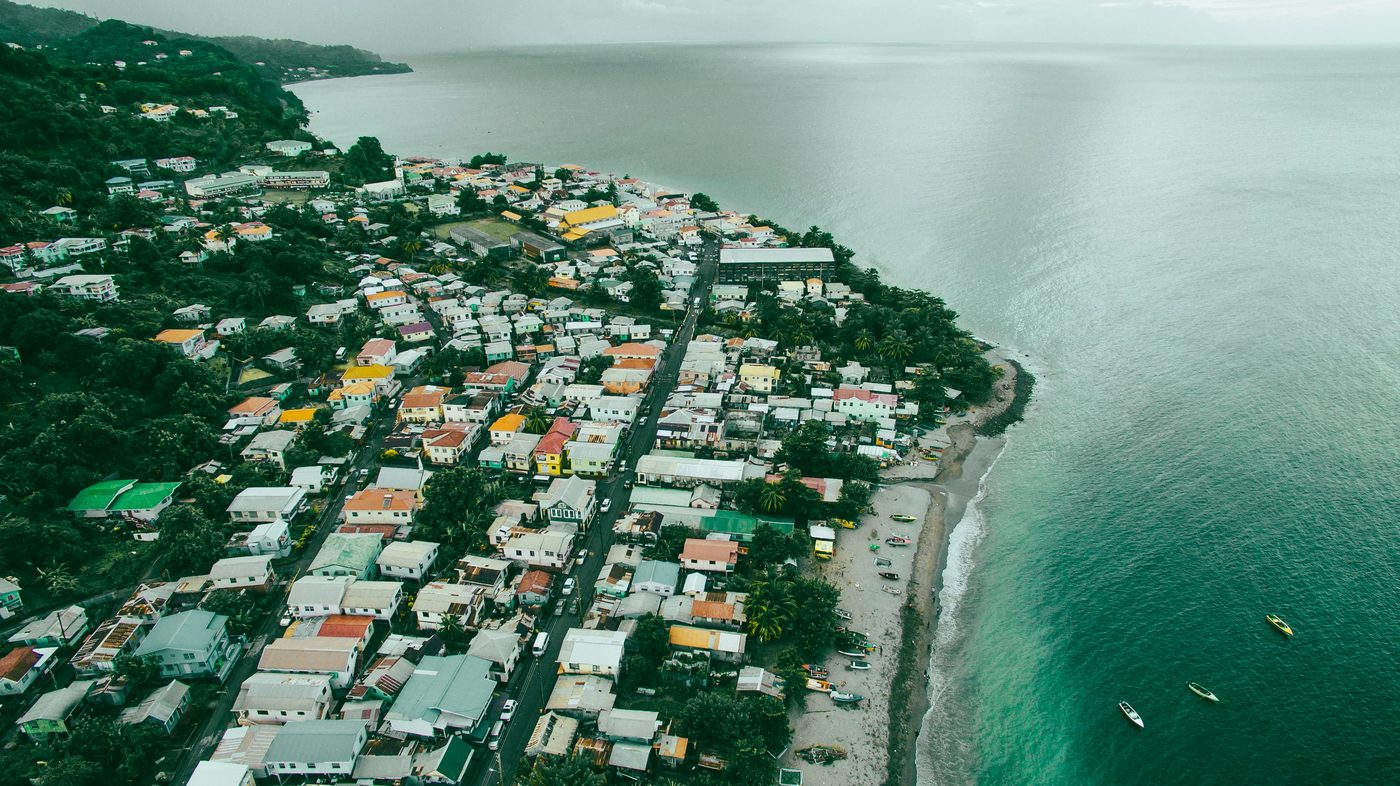
A different kind of framing.
The ocean has always been a place of reckoning. It is where the atmosphere and geosphere meet the hydrosphere, where currents are set in motion, where the biosphere still thrives, and where the impacts of change play out across massive scales. To study oceanographic systems is to sit with that enormity.
As ocean temperatures broke record through 2023, 2024 and 2025, and with the El Niño we face in 2026, it is clear that the conversation around ocean health needs a different kind of framing: moving beyond dystopia and into the territory of hopeful planetary thinking. What are the systems at work? How are they affecting planetary ecosystems? And crucially, what decisions still matter?
Ocean Futures: Part I, and now Ocean Futures: Part II are an attempt to hold that complexity without flattening it. These independent reports draw on climate science, systems thinking, and futures design to map the forces shaping our seas, with ocean health as the central thread. Warming does not happen in isolation. It pulls on everything: the carbon cycle, marine biodiversity, coastal communities, global food systems, geopolitical stability. This work traces those connections as honestly as possible.
This is created for people who want to think deeper about what is happening to the ocean, what has already changed, and what remains possible. The future of the ocean is not yet set, and much of what happens next depends on choices being made today. This resource aims to be a useful tool for those making them.
I didn't want to build another doomsday clock for the ocean. I wanted something that treats people like they can handle complexity, and still choose to act.
Arvind Bhallamudi, Founder, Ocean Futures
Three lenses, one ocean.
Ocean Futures is built at the intersection of three disciplines, none of which is sufficient on its own. Ocean science supplies the facts: what's measured, what's changed, what's uncertain. Systems thinking refuses to let any single fact stand alone, tracing how warming water pulls on fisheries, carbon markets, coastal infrastructure and geopolitics all at once. And futures & design practice is what turns that understanding into something a reader can actually use: a map, a framework, a decision worth making today.
None of these replace the others. A systems diagram without real data is speculation. Data without design stays locked in a PDF nobody reads. The overlap in the middle, where rigor, interconnection and usability all hold at once, is deliberately where this project tries to live.
How this gets made.
Every number here traces back to a real source. NOAA, GBIF, OpenStreetMap and the rest are listed in full on the Resources page. Where something is an estimate or a projection rather than a direct measurement, I try to say so clearly rather than let it pass as fact.
This is an independent, self-funded project. There are no sponsors, no advertisers, and no paid placements. No company gets a say in how its product, sector or technology is described here.
I get things wrong sometimes, and I'd rather hear about it than not. If you spot an error or something that's gone out of date, email me at arvindb.work@gmail.com and I'll fix it.
The opinions and framing throughout are my own, shaped by the people and organizations credited in the acknowledgments below.
Shaped by generosity.
This project would not exist without the people and organizations who shaped the thinking behind it.
Deep gratitude goes to the team at Terra.do (in particular Anders Halverson, Anshuman Bapna, Kamal Kapadia and the Sea Turtles cohort) for creating a learning environment that speaks to the urgency of the moment. It is rare to find a place where scientific literacy and community-centered thinking are taught together, and that has opened new worldviews that continue to inform this work.
This project initially took shape at Big Dreams Studio in 2023, where an early conversation about oceans and design futures became Ocean Futures: Part I (a STEEP report and toolkit website), the seed of everything that followed. Thank you Alyssa Bishop, Diana Sanchez, Nick Scappaticci, Jack Lenk, Laila Aukes, and Jae Yoon Myung for creating a place where ambitious, yet unfinished ideas were welcomed.
Huge thanks to Zoe Lee and Annie Chen from BEAM Studio, Nikhil Neelakantan from Ocean Visions, and Daniel Grushkin from Biodesign Challenge for the valuable stream of advice and inspiration.
Finally, to everyone working on the health of our oceans: scientists, policymakers, activists, educators, designers, and innovators, this report is made in solidarity with your efforts. The ocean deserves more than alarm. It deserves attention and care. I hope this is a contribution to that.
Arvind Bhallamudi
Designer & Strategist · arvindbhallamudi.com
Building a platform for healthier oceans.
Ocean Futures is built to be explored on your own, but if you're working on something ocean-related, I'm also available to work with you directly.
A short course on ocean health: the science and the economics, in digestible parts.
Real, live and interpolated ocean data: climate, ecosystems, biodiversity and shipping.
Explainers, ideas and essays that unpack a concept or a working perspective.
Advisory work, speaking and research collaborations on ocean health and climate strategy.
Let's talk about the oceans.
Advisory work, speaking, or a research collaboration. Reach out directly and I'll get back to you.
arvindb.work@gmail.com