Finding a green lining.
The ocean generates more than half the planet's oxygen and has absorbed 90% of the excess heat from human activity. The case for treating biodiversity, not just engineering, as the scalable climate solution.
The ocean's rising temperature, and temper
The ocean generates more than 50% of the planet's oxygen, absorbs 25% of carbon dioxide emissions, and has captured 90% of the excess heat generated by human activity. In recent decades, the rate of warming in the upper ocean, the top 2,000 meters, has run about 40% higher than earlier IPCC estimates showed. That stored heat causes seawater to expand, which is responsible for a third to a half of global sea level rise on its own, and most of the added energy sits at the surface, in the top 700 meters. The last ten years were the ocean's warmest decade since at least the 1800s, and 2023 was its single warmest year on record, partly driven by that year's El Niño. All of it points to weakened or lost ocean ecosystems that are less able to protect life and buffer climate risk than they used to be.
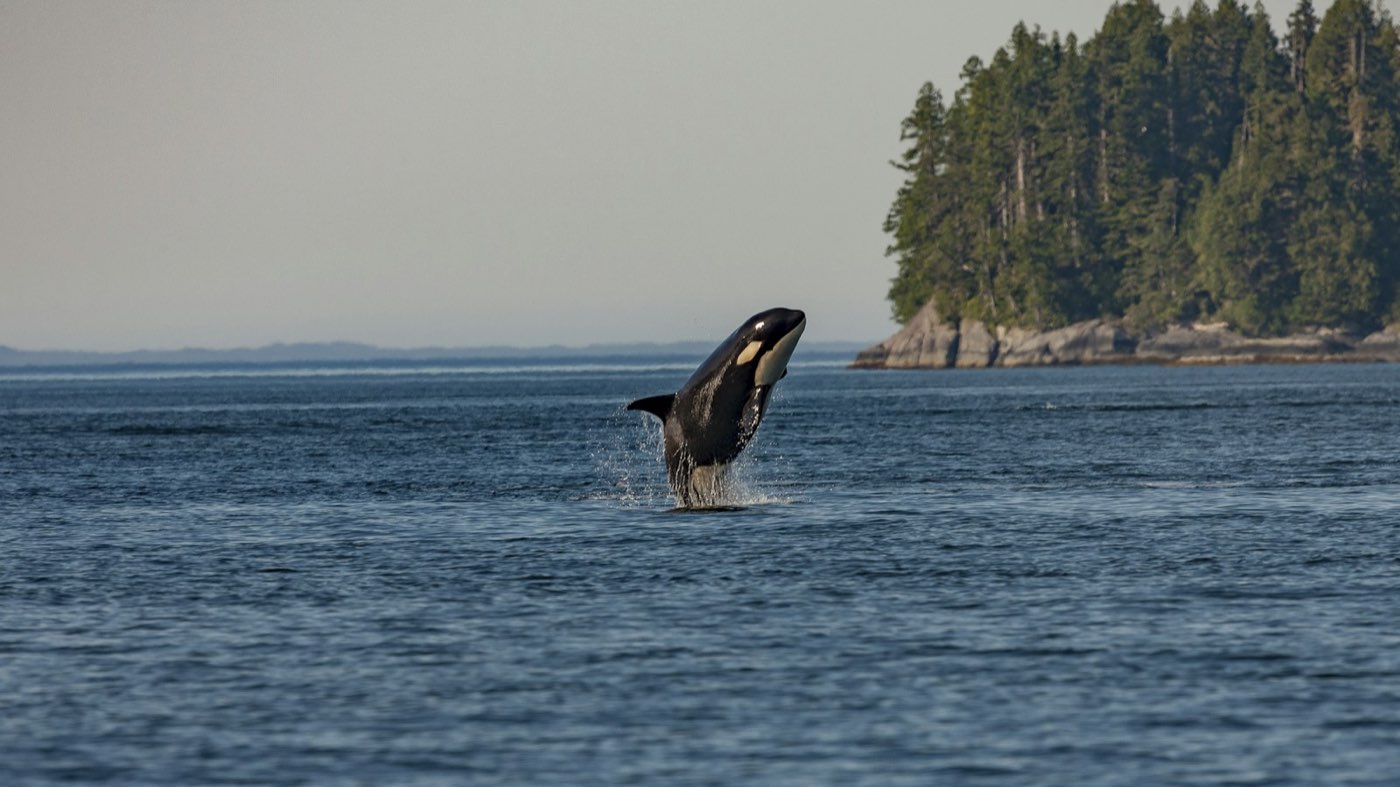
In 2025, an orca known as Tahlequa was photographed off West Seattle carrying the body of her dead newborn, researchers' description of what appeared to be grief, the second time in six years she has been documented doing this. It's a small, specific image, but it points at something larger: we need to stop polluting the seas and depleting fish and seafood stocks for our own appetite, and let these animals survive in the habitats they actually have left. Alongside the warming comes sea level rise, ocean stratification, expanding low-oxygen "dead zones," rising acidification, and greenhouse gas concentrations hitting new records every year, a combination serious enough that climate scientists now describe it as an ocean emergency. Carbon emissions make the ocean more acidic, which makes it harder for corals, plankton and shellfish to build their own shells and skeletons, compounding stresses that already reduce their growth and survival. Marine heatwaves have doubled in frequency and grown more intense, especially across Southeast Asia, and the UN Environment Program warns that every coral reef on Earth could bleach by the end of the century if warming continues on its current path. We are living through a mass extinction, with an estimated 69% of monitored species lost since 1970, and it is still getting worse. This isn't one unstable ecosystem, it's many interconnected ones, land to air to sea, each amplifying the others' instability.
The steady ramp-up of human activity in the ocean, fishing, transport, energy, tourism, bio-products, is the primary driver behind that instability, accelerating habitat loss, carbon-sink loss and biodiversity loss, all of which loop back into human health through polluted water and food. Climate regulation, food, health, energy, materials: managing the planet's oceans sits at the center of most of these, and it starts with deepening what we actually know about marine biology, chemistry, physics, geology and archaeology, so we can protect ecosystems that are fragile but still capable of recovering if we change course.
Finding a green lining
Jevons paradox describes a pattern seen repeatedly, in coal mining, retail, and well beyond: efficiency gains in using a scarce resource tend to increase consumption of it, not reduce it. Humans consistently want more than they have, and left unchecked, that alone could be reason enough for a reckoning with resources and extreme weather in the near future; the costs of extraction and pollution are already surfacing as cracks in society, falling hardest on marginalized communities and already running into the trillions.
Reducing consumption outright, against the momentum of today's systems, is genuinely difficult. But there's a real "green-lining" available, a term usually used for directing investment toward communities that have been left behind, applied here to a resource with billions of years of its own head start: biodiversity. Compared to hard-tech engineered carbon-sink methods, biodiversity offers a natural, low-cost, scalable way to sequester carbon while also supporting the communities that depend on it. 83% of the global carbon cycle moves through the ocean's 500,000 to 10 million marine species, roughly two-thirds of which haven't even been formally described yet, with almost 2,000 new species still accepted into the scientific record every year, each one holding carbon of its own. That ecosystem also provides provisioning services (fish, shellfish, seaweed, mangrove timber, algae, minerals), regulating services (coastal protection, erosion prevention, water purification, carbon storage) and cultural services (recreation, spiritual and intellectual value), all of which can be designed to reinforce the natural habitats they depend on rather than draw them down.
What this looks like in practice
Concretely, centering biodiversity means a specific set of moves: reducing consumption and unsustainable growth; halting trawling, overfishing and oversized fishing fleets; reshoring and localizing businesses closer to where their impact actually lands; protecting biological corridors and marine protected areas; seaforestation; rewilding mangroves, marshes and seagrasses; and developing biomaterial and bioacoustic approaches to restoring coral reefs. None of these are speculative, each is already being piloted somewhere, deploying ocean energy technologies like offshore wind and tidal power designed from the start around habitat and toxicity impact rather than retrofitted around it, and improving fisheries and mariculture practices directly. Done well, none of this trades people off against ecosystems, it's the same investment viewed from two sides. The 2022 Kunming-Montreal Global Biodiversity Framework's headline 30x30 target, protecting 30% of the world's land and seas by 2030, is one concrete, measurable version of that commitment, adopted by nearly every country on Earth, achievable through specific, measurable action across locations, roles and timeframes rather than one global gesture.
What's still missing is a real answer to what these actions are worth: whether reduced trawling or a restored mangrove corridor can become an actual currency, a policy, or an accepted norm in the market, and what an "ocean credit" would even mean if one existed. That's as much an open design problem as a conservation one.
Where this leaves us
None of this is a single silver-bullet fix, and it was never going to be. Becoming part of the solution starts with where we are now, bringing the broader community into addressing a crisis this size, which only works through a shared goal and decisions that are transparent and accountable to the people living with the consequences. Done with biology genuinely factored into each decision, it benefits humans and every other organism sharing the planet: cleaner air and water, more available resources, better odds for both the near and far future. What it requires is building expertise across sectors that don't normally talk to each other, finding the right problems, the right people and the right targets, and treating biology as a constraint worth designing around rather than an externality to manage later. A combination of climate-tech and nature-tech, pursued with real optimism but reviewed critically and implemented equitably, is a plausible path toward a planet that stays livable rather than merely surveyed as it declines.